
Visual Styles of Film Noir
Low-key Lighting
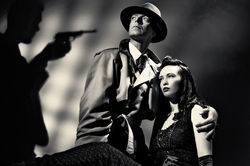
is a common visual style used in film noir and horrow genres. It is an essential element to create a chiaroscuro effect. Low-key lighting uses only one key light, controlled with a fill light or a simple reflector.
"Noir" is a French word which defines as the meaning of "Black" in English.
Film noir is a cinematic film term used mainly to describe crime dramas.
It started generally from the early 1940s to the late 1950s.
Film noir in this era used the style of low-key black-and-white visual style.
Nino Frank is the first film critic that applied this visual style to the Hollywood films.
Film noir is a movie which misleads you into thinking there is going to be a happy ending.
It's locations are mainly at reek of the night, of wet asphalt, of, smoke, of shadows, of alleys, of the back doors of fancy places, of deserted streets, of dark tenements, of apartment buildings with a high turnover rate, of taxi drivers and bartenders who have seen it all.
Film noir is so filled with doom, fate, fear and betrayal.
Relationships in which love is only the final flop card in the poker game of death.
Film noir's characters are always smoking.
The best smoking movie of all time is "Out of the Past," in which Robert Mitchum and Kirk Douglas smoke furiously at each other.
NOIR //
 |  |
|---|---|
 |  |
 |  |
 |  |
 |  |
|---|---|
 |  |
Low-angle Shot
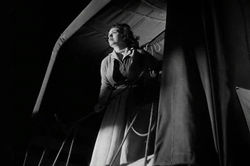
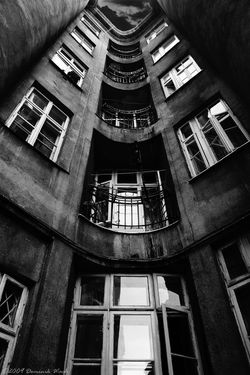
is a shot from a camera angle which positioned low on the vertical axis, anywhere below the eyeline, looking up.
 |  |
|---|---|
 |  |
Dutch Angle
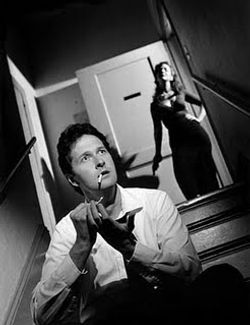
known as Dutch tilt, canted angle, oblique angle or German angle, is a type of camera shot where the camera is tilted off to one side so that the shot is composed with vertical lines at an angle to the side of the frame.
 |  |
|---|---|
 |
Three-point Lighting
is a standard method used in visual media.By using three separate positions, the photographer can illuminate the shot's subject however desired, while also controlling the shading and shadows produced by direct lighting.
 |  |  |
|---|---|---|
 |  |  |
Wet Asphalt
 |  |  |
|---|---|---|
 |  |
Smoke
 |  |  |
|---|---|---|
 |  |
Deserted Streets
 |  |  |
|---|---|---|
 |  |